Voter Ignorance and Failing Democracy

mte5ndg0mdu1mdewmjq4mja3

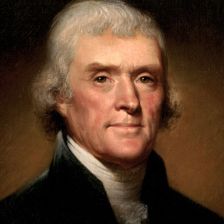
“If a nation expects to be ignorant and free, in a state of civilization, it expects what never was and never will be.” — Thomas Jefferson, letter to Charles Yancey, 1816. 

I fully acknowledge that to many this post will smack of elitism, but the facts of the matter stand irrefutable. Ignorant, uninformed and irrational voters constitutes the single greatest threat to the success of modern democratic institutions.

In a 1947 speech to the House of Commons, Winston Churchill is said to have quipped, “…democracy is the worst form of government except for all those other forms that have been tried…” (Langworth 2009). What is it about democracy that renders it so imperfect? While numerous arguments against democracy have sprung up from time to time, nearly all criticisms have noted one great flaw in particular. As John F. Kennedy put it, “the ignorance of one voter in a democracy impairs the security of all.” Winston Churchill based his skepticism of democracy on the very same thing stating, “the best argument against democracy is a five-minute conversation with the average voter.” Indeed, the very founding thinkers of the democratic institution feared the ignorance of voters. Aristotle proclaimed, “it… is dangerous for men of this sort to share in the highest offices, as injustice may lead them into wrongdoing, and thoughtlessness into error” (Aristotle 1946). The simple fact of the matter is that “almost every democratic theorist or democratic political actor sees an informed electorate as essential to good democratic practice” (Hochschild 2010).

Our modern political era and the global rise of populism seems to be illustrating to the world the implications of an uniformed and ignorant electorate. Take last night’s so called “Brexit” vote in the United Kingdom, in which UK voters at a turnout greater than 70% elected to leave the European Union. The vast majority of leave proponents were white, blue-collar, under-educated individuals who were dissatisfied about their independence and economic prospects in a globalizing world. Many of these individuals cast their ‘leave’ vote for economic reasons, despite the fact that a group of 10 Nobel-prize winning economists advised strongly against it stating, “the economic arguments are clearly in favor of remaining in the EU” (Asthana and Treanor 2016). Perhaps, more shockingly, 80% of American voters supported a leave vote in Britain, though the prospect of any positive repercussions for the US are slim to none (Sola 2016). Only time will tell the ultimate consequences of this impassioned vote, but it is not looking likely to favor those who supported it most. Far too often in today’s political landscape, voters’ flawed opinions are based on the propaganda of populist leaders who, out of political ambition and ulterior motives, have risen as a “voice for the peoples’ discontent.” Similar trends are happening in France and the United States where white, under-educated, blue-collar individuals feel rightfully threatened by the prospects of the globalized world about which they have managed to remain blissful ignorant. This has led many uninformed and irrational voters to follow the campaigns of populist candidates with extreme positions and inflammatory speeches, which on an intellectual level amount to little more than incoherent pandering and very little actual policy. In his ground-breaking work “The Myth of the Rational Voter,” Bryan Caplan explained this phenomenon stating “What happens if fully rational politicians compete for the support of irrational voters — specifically, voters with irrational beliefs about the effects of various policies? It is a recipe for mendacity” (Caplan 2007). A recipe for mendacity… if I had to choose one word to describe the political careers of figures like Donald Trump (USA), Boris Johnson (UK), and Marine Le Pen (France) it would be, mendacity.

So what is to be done? Steve Chapman of the Chicago Tribune lamented, “The most concerted efforts to inform voters won’t work unless voters have good reason to learn. And they don’t. After all, a person who learns a lot in order to vote intelligently has almost zero chance of changing the outcome of any election. Aside from the feeling of virtue it may confer, it is an irrational indulgence. Ignorance, by contrast, is perfectly rational.” George Mason University Law Professor, Ilya Somin, in her much praised book, “Democracy and Political Ignorance” pointed out that “political knowledge levels have risen little if at all over the last several decades, despite major increases in education and the availability of information. Demand for information, not supply, is the main constraint on political learning in a world where most people are rationally ignorant about politics” (Somin 2013). In other words, we have allowed our modern democratic systems to degrade to the point that informed voting is irrational, while voting in ignorance is rational. This affects the entire manner in which politics plays out in the modern era, and has become a self-fulfilling prophesy of inept, undemocratic and self-destructive government.

In considering a possible solution to this great flaw of democracy, Bryan Caplan asks,

“Would we still have a “democracy” if you needed to pass a test of economic literacy to vote? If you needed a college degree? Both of these measures raise the economic understanding of the median voter, leading to more sensible policies. Franchise restrictions were historically used for discriminatory ends, but that hardly implies that they should never be used again for any reason. A test of voter competence is no more objectionable than a driving test…Both bad driving and bad voting are dangerous not merely to the individual who practices them, but to innocent bystanders” (Caplan 2007).

It is hard to deny that such a solution constitutes educational elitism, and is unacceptable and unrealistic. However, I do not believe that we have to merely accept a world in which ignorance of politics is the rational position. In his Chicago Tribune article, Steve Chapman muses,

“This is an election year, which means all of us will spend the next few months carefully following the campaigns, finding out all we can about the candidates’ proposals and pondering what issues are most vital for the nation’s future. Just kidding. Most of us wouldn’t do that if you tased us to within an inch of our lives. In fact, many won’t learn the most rudimentary facts about the people running for office and the policy issues they will have to address. Some of us will jump to believe any half-baked rumor or stereotype that confirms our prejudices. We’ll vote to reward or punish incumbents for events that they have nothing to do with. Some voters won’t even find out the names of the people running for many offices. In short, the citizenry as a whole will carry out what looks like a giant cartoon parody of democracy.”

Sadly, this “cartoon parody of democracy” is more than likely how this election year will play out, but it doesn’t have to be that way. Why is it that so many citizens feel more patriotic and impassioned about suiting up in military gear and dying in foreign wars than researching political and economic policy and voting responsibly? Don’t get me wrong, I believe the brave and honorable sacrifice of our military men and women is an essential part of our democratic existence, but perhaps fewer of them would have to die in unnecessary wars, if we made the effort to be a little better informed about foreign policy, and voted accordingly. Perhaps we would not have to fear immigration and globalization, if we made a minimal effort to step from the dark of cultural ignorance into the light of understanding, and voted accordingly. Perhaps we would not have to fear for religious liberty, if we learned what liberty for all religions meant, and voted accordingly. Perhaps we would not have to beg crumbs from the one percent if we all learned just a tiny bit more about economic policy and regulation, and voted accordingly. Perhaps we would not have to fear being mowed down by an assault rifle at the movie theater if we studied a little bit more about the actual second amendment and sensible gun regulation, and voted accordingly.

The list goes on and on, and one might easily say, “I don’t have time to go researching all of that,” but in an age with such quick and easy access to information, it is irresponsible and undemocratic to think you deserve a right to vote while neglecting ample opportunity to suit yourself to that right. Ignorance breeds populism. Populism based on ignorance breeds poor policy. Poor policy breeds fumbling economies and failing democracy. Upholding democracy and honoring your right to vote means researching and informing yourself of the facts around policy positions, and voting accordingly. This is simply not done by reading pundit tweets and watching talking heads on cable news. So what can we do? We can research an issue by reading a scholarly article (published in respectable peer-reviewed journal). We can participate in lively policy debate using facts from scholarly sources and not from pundits seeking retweets, bloggers seeking page views, and cable news entertainers seeking ratings. We can hold our elected officials responsible based on policy position not party. And last, but certainly not least, we can enter the ballot box armed with information and facts, not opinions and rhetoric, and we can vote, intelligently, responsibly, truly democratically. Thomas Jefferson was right to warn that we can be ignorant OR free, but not both.

References and Additional Reading

Caplan, Bryan. 2007. “The Myth of the Rational Voter: Why Democracies Choose Bad Policies.” Princeton University Press. Online. Retrieved from http://object.cato.org/sites/cato.org/files/pubs/pdf/pa594.pdf

Chapman, Steve. 2012. “Mixing ignorance and Democracy.” The Chicago Tribune. Online. Retrieved from http://articles.chicagotribune.com/2012-04-19/news/ct-oped-0419-chapman-20120419_1_political-ignorance-league-of-women-voters-democracy

Fowler, Anthony and Margolis, Michele. 2013. “The political consequences of uninformed voters.” Journal of Electoral Studies (2013) 1-11. Retrieved from http://www.michelemargolis.com/uploads/2/0/2/0/20207607/fowlermargolis_electoral_studies.pdf

Hochschild, Jennifer. 2010. “If Democracies Need Informed Voters, How Can They Thrive While Expanding Enfranchisement?” Election Law Journal: Rules, Politics, and Policy 9 (2), June 2010: 111-123. Retrieved from http://scholar.harvard.edu/jlhochschild/publications/if-democracies-need-informed-voters-how-can-they-thrive-while-expanding-en

Jefferson, Thomas 1903-04. The Writings of Thomas Jefferson, Memorial Edition, 20 Volumes. Washington, D.C: Thomas Jefferson Memorial Association.

Langsworth, Richard. 2009. “Democracy is the worst form of government.” Richard Langworth Online. Retrieved from https://richardlangworth.com/worst-form-of-government

On Global Terrorism: Losing the World War of Ideas

I’ve been struck by the number of people on my social media who are upset that similar events in Bagdad, Beirut, etc… were not covered by main-stream media. While I do agree there is a disparity in media coverage, I think the world is all too aware that Paris is not a unique case. Were it a unique case, it wouldn’t be so terrifying and disheartening, but it isn’t unique, terrorism has become a universal pandemic affecting all cultures and people. We must realize that not all terrorists are Muslim or Arab, not all victims are American or European, and the problem isn’t going to solve itself if we just keep doing what we’ve been doing.

We have, for nearly two decades, attempted to stop terrorism with tanks, guns, invasions, drones, and more, but it obviously isn’t working. Killing the “leaders” of a “leaderless jihad” does little to stop the terror. We are not fighting people and organizations, we are fighting ideas, and not very well. Paris is a vicious and ugly reminder that terrorism is still a serious threat, and none of us are beyond its reach. However, we are not helpless!

First, I think we need to stop promulgating the idea that terrorist are irrational, deranged individuals beyond the reach of humanity – in the majority of cases, this is simply not true. They are rational and reachable, after all terrorist organizations are managing to reach these vulnerable peoples all over the world. We just need to be better at it, than they are. We must be better at meeting them where they are, recognizing that their discontent and even rage is often justified, and then working to provide a healthy way to express and address it.

Looking at Marc Sageman’s steps of radicalization can be very instructive. If these are indeed the steps of radicalization, we simply need to break the chain in any way possible. For example,

1) A sense of traumatic experience based on personal experience or the treatment of Muslims around the world – The hard truth is that we have got to be better at not providing these traumatic experiences to the Muslim world. I am not saying that we stop pursuing known terrorist, ISIS, Al-Qaeda, etc…, but we have got to be better at making the distinction between these groups and average, everyday Arabs/Muslims. Collateral damage is unacceptable. Killing innocent civilians with drones is as much terrorism as the killing of innocent civilians by suicide bomb, and we shouldn’t be surprised if they view it as such.

2) Interpreting that experience in terms of larger organizational (Al-Qaeda) beliefs, creating a sense of moral outrage: Organizations like Al-Qaeda and ISIS seem to be very good at aligning an individual’s discontent and rage to their larger organizational ideals. They create moral outrage for their cause. We must beat them at this game. Rather than dismissing the rage and discontent of these individuals, we must meet them where they are and help them express and address these things in a healthier manner. Ignoring their discontentment only drives them into the arms of those who would use them to do us harm.

3) Sharing such “moral outrage” with the group at large (chat rooms, internet, travel, etc..): We must use our resources to track and stop such online interactions, while simultaneously fostering healthier online connections. These individuals still need to share moral outrage with a group at large, but it could be with more productive, less violent groups.

4) Mobilization of group outrage in violent actions – As last resort, we must continue intensive security procedures and precautions, to stop those not yet dissuaded.

I do not deny that this is all easier said, than done. I admit it is much easier and more comfortable to just say these people are irrational, deranged individuals. It is easier to not try and make sense of the senseless. It is easier to say there is nothing we can do about it, except perhaps blow-up their inspiration. Unfortunately, if the last decades have taught us anything, it is that world terrorism is like the Hydra of Greek mythology, for every head we cut off several more arise. We must go for the heart of the beast, and not the head.

Sageman, Marc. 2009. Leaderless Jihad. 16.3. Philadelphia: University of Pennsylvania Press.

Boren Scholarship: The Adventure Begins…

In June of 2011, when I first looked into The Boren Awards Scholarship Program, I thought the program far too competitive for me, and quickly resigned myself to the fact that there was little to no chance I would ever qualify. However, upon discovering Boren’s 2012 African Language Initiative program for Portuguese study in Mozambique, I couldn’t resist at least applying. I began the long rigorous application process in July 2011 with very little expectation of any substantive results.   Little did I know that this seemingly hopeless whim would turn into the opportunity of a lifetime.

According to the Boren website, “Boren Scholarships provide up to $20,000 to U.S. undergraduate students to study abroad in areas of the world that are critical to U.S. interests and underrepresented in study abroad, including Africa, Asia, Central & Eastern Europe, Eurasia, Latin America, and the Middle East…Boren Scholarships are funded by the National Security Education Program (NSEP), which focuses on geographic areas, languages, and fields of study deemed critical to U.S. national security. NSEP draws on a broad definition of national security, recognizing that the scope of national security has expanded to include not only the traditional concerns of protecting and promoting American well-being, but also the challenges of global society, including sustainable development, environmental degradation, global disease and hunger, population growth and migration, and economic competitiveness.” Perhaps now the reader can see why I was intimidated by the prospects of application.

Nonetheless the application process proceeded slowly and uneventfully. I filled out all applications, interviewed with Boren representatives at my university, wrote an essay on the importance of Mozambique in US national security, participated in language proficiency interviews, gathered letters of recommendation from professors and colleagues, and submitted all parts of the application by the January 2012 deadline. Upon submission my future passed into the hands of Scott Galer, my Boren campus representative, who would write my final recommendation, and the Boren selection committee who would make the ultimate decision. I waited somewhat hopefully, but well aware of the fact that only a small percentage of the applicants get selected (about 150 out of thousands).By May 2012, I felt fairly certain I had not been selected, but then the email came. I was informed that I had been selected  would receive Boren Funding to participate in the American Councils African Language Initiative program at the Universidade Eduardo Mondlane in Maputo, Mozambique.  I was ecstatic to say the least. Through the word of one brief letter my life passions seemed to instantly become achievable in a way I had previously never let myself believe possible. I was being given the chance to travel to the country I love, to study the people I love, in the culture I love, for the country I love. (Not to mention they were picking up most the tab.)

And so began the journey from wistful applicant to Boren Scholar. I am incredibly grateful for the opportunity that has been afforded me to complete my undergraduate education in such a fulfilling manner. I am fully dedicated to making the most of this experience, and I hope that my life and accomplishments might prove someday to be a valuable return on a generous investment.

Go back

Your message has been sent

Warning
Warning
Warning
Warning

Warning.

“To stop is to die…”

“Parar é Morrer” -Avo Albertina

Some of us are fortunate enough to experience a moment, that moment in our lives when ever thing begins to seem clearer. When life and its purposes become, if only for a moment, comprehensible. The wise hold to these moments and seek to emulate the lessons learned throughout life. My moment occurred in the hen-pecked yard of a frail African grandmother.  The message she shared with me that day has come to define my life and my passions. It is my life motto. It is the reason for this blog and inspire the change I hope to be in this world.

Avo Albertina was our frail African neighbor. She was only 62, but by African standards she seemed ancient. Her black face was wrinkled with time and her deep blue eyes had seen much suffering. We passed her small vegetable stand almost daily. She meekly sold her simple goods in hopes of one day having the long sought money to free her imprisoned son. Avo Albertina was raised Catholic, but has never truly left her tribal roots. She sat on the low cement barrier near the dust strewn thoroughfare, her worn feet dangling as she smiled to everyone. She was simple. She was innocent.  I was sick and she gave me an old moldy grapefruit, insisting it would help. Miraculously it did help. I offered to pay her and she refused telling me to pay her the next day. We passed by and I offered again, but I already knew that it would be just another day in the saga of “pay me tomorrow.” She was charitable. Her excuse for postponing my payment was that she had a son in another country and if she believed that if she took care of another mother’s son, another mother would take care of hers. She needed the money.

We passed by one day and she was not in her usual spot. As we approached I began to worry. Maybe she is sick. We decided to check in to it and found her at her simple grass hut. She was running late. I saw her usual table in the corner of the yard and offered to carry it out. As I grabbed the table Avo Albertina shouted,

“Don’t touch that table!”

I was taken aback. Why won’t she let me touch her table? I just wanted to help. As I wondered to myself, she walked over to the table, and with surprising agility raised it on her head. I was shocked that her fragile frame could support its weight. I saw her canvas bag heavy with grapefruit, lemons, lettuce, eggplant, and a menagerie of other foods sitting on the other side of the yard leaning against the familiar tin gate. I quickly crossed the yard offering to carry the bag, but again I heard,

“Don’t touch that!”

She wobbled over to the gate and in a dance of ragged cloth and gray hair she maneuvered the heavy bag on top of the table on her head. Moaning a little under her load she smiled at me. I felt a bit of a fool as my young agile body stood there free of any load while her frail ancient body groaned under the weight of a wooden table and a large bag of fruit. I foolishly said the only thing that came to my mind,

“Avo Albertina you are so strong!”

Avo Albertina stopped dead in her tracks and brought her face close to mine. Her deep blue eyes pierced mine fiercely in a gaze that seemed to grasp my very heart. When she was certain she had my attention she said,

“Elder, Parar é Morrer!”

Parar é Morrer, to stop is to die! Those simple words penetrated into my soul and opened my mind. To stop is to die. This little frail African woman continued to cling to life with this simple philosophy. She kept going because if she stopped she would die as she had seen so many do. What a profound concept; physically… spiritually… mentally. Was this life’s greatest lesson? To stop is to die.

Perhaps my influence in Africa has been minimal, but its influence on me has been profound and irreversible. As my life continues and I seek to follow my heart and my passion, I will be guided by the life lessons I have learned from the African people, the greatest of which being “to stop is to die.”

Go back

Your message has been sent

Warning
Warning
Warning
Warning

Warning.